
American Board Certified Orofacial Pain Specialist · Yelahanka
Facial, Jaw or Tooth Pain That Nobody Has Been Able to Explain?
The Pain Is Real. The Source May Not Be Where You Feel It.
Whether your teeth overlap, stick forward, have gaps, your bite feels wrong, or your teeth have shifted after previous braces — the first step is finding out why.
At GardenCity Smiles, Dr. Deepthi Kalahasti evaluates the pattern and possible source of persistent or complex facial pain before recommending treatment.
- Diagnosis first
- Evidence-informed care
- Conservative management wherever appropriate
Dr. Deepthi Kalahasti
- GardenCity Smiles · Yelahanka New Town
American Board Certified in Orofacial Pain
One of a small number of dentists in India with this qualification.
Comprehensive Facial Pain Assessment
Structured evaluation of all possible pain sources before any treatment.
TMJ & Jaw Function Evaluation
Clinical assessment of joints, muscles, movement and bite.
Medical Referral & Co-management
Coordination with neurology, ENT and other specialists when required.
Start Here
Start With What You Feel — Not What You Think the Diagnosis Is.
The location of your pain is where we begin. The source may be somewhere else entirely.
🦷
My Tooth Hurts but Nothing Shows Up
Learn more
😬
My Jaw Hurts
Learn more
👂
Pain Near My Ear
Learn more
😣
My Face Hurts on One Side
Learn more
🔒
My Jaw Clicks or Locks
Learn more
🌅
I Wake With Jaw Pain
Learn more
🤕
I Have Headaches With Jaw Tightness
Learn more
🔥
My Mouth or Tongue Burns
Learn more
⚡
I Get Electric-Shock-Like Pain
Learn more
⚠️
Pain Started After Dental Treatment
Learn more
📅
I've Had Pain for Months
Learn more
❓
I'm Not Sure Where the Pain Is Coming From
Learn more
What Is Orofacial Pain?
Orofacial pain refers to pain experienced in the mouth, jaw, face and related structures. It may arise from teeth and gums, chewing muscles, temporomandibular joints, nerves, headache disorders or other medical conditions. Because several conditions can produce similar symptoms, identifying the source of pain is often more important than immediately treating the location where the pain is felt.
The field of orofacial pain focuses on understanding why pain occurs where it does — not simply on treating the most obvious or accessible structure. This matters because pain is sometimes referred: felt in one area but originating in another.
An orofacial pain assessment considers all possible sources before recommending treatment — including structures beyond the teeth themselves.
Where Pain Can Come From
Teeth & Supporting Structures
Dental, periodontal, periapical
1
Jaw Muscles
Myofascial, masticatory muscle disorders
2
Temporomandibular Joint
Articular disc, joint surfaces, ligaments
3
Cranial Nerves
Trigeminal nerve, neuropathic conditions
4
Headache-Related Facial Pain
Migraine, tension-type, secondary headaches
5
Persistent Orofacial Pain
Central sensitisation, chronic pain conditions
6
Educational overview only. Diagnosis requires clinical assessment.
Where You Feel Pain Is Not Always Where the Problem Begins.
Pain can sometimes be referred from one structure to another. Muscle-related pain can be felt around a tooth, temple or ear. Certain nerve-related pain can resemble toothache. Headache disorders may sometimes be experienced in facial regions.
Irreversible dental treatment should not be performed simply because pain happens to be felt in a tooth.
Diagnostic Categories
Different Conditions Can Feel Surprisingly Similar.
This is why orofacial pain requires a systematic evaluation — not just treatment of the most obvious symptom.
Dental & Dentoalveolar Pain
Conditions involving teeth, gums or surrounding tissues. The most common source — but not the only one.
Myofascial Orofacial Pain
Conditions involving the temporomandibular joints, jaw muscles and related structures. One category — not the whole field.
Pain related to injury or dysfunction involving nerves. Can be burning, electric, shooting or constant.
Persistent pain in a tooth or tooth-bearing region when local dental findings do not adequately explain the symptoms.
Headache-Related Facial Pain
Certain headache disorders may present partly within facial or oral regions.
Burning Mouth Symptoms
May require evaluation of local, systemic, medication-related and neurological factors.
Pain perceived away from the structure where it originates. A known cause of misdiagnosis.
These descriptions are educational and are not intended for self-diagnosis. A clinical assessment is required to evaluate your specific symptoms.
TMJ & Jaw
TMJ Disorders Are Only One Part of Orofacial Pain.
TMD is not a single condition — it is a group of related conditions with different causes and different treatments. Accurate classification matters because different subtypes respond to different approaches.
- Pain during chewing
- Pain around the jaw joint
- Painful clicking
- Jaw fatigue
- Limited mouth opening
- Jaw muscle tenderness
- Locking
- TMD-related headaches
A Clicking Jaw Without Pain Does Not Automatically Require Treatment.
Clicking or popping sounds from the jaw joint are common in the general population. When clicking is not associated with pain, restriction or functional difficulty, active treatment may not be indicated. Assessment determines whether intervention is appropriate./p>
Key Principle
Oral Appliances
Does Every Jaw-Pain Patient Need a Splint?
No.
Clicking or popping sounds from the jaw joint are common in the general population. When clicking is not associated with pain, restriction or functional difficulty, active treatment may not be indicated. Assessment determines whether intervention is appropriate.
An oral appliance may be considered when clinically appropriate based on the specific diagnosis and treatment objective.
Reversible treatment where appropriate — splints should not permanently alter the patient’s bite or be used as a substitute for diagnosis.
What a Splint Should Not Be Used For
Avoid“Splints cure TMJ disorders.”
- An appliance is a management tool — not a cure.
Avoid“Splints place every jaw into an ideal position.”
- There is no universally ideal jaw position that an appliance reliably establishes.
Avoid“Splints are required for almost all TMD patients.”
- Many patients benefit from conservative, non-appliance management.
Avoid“Splints should permanently alter the patient’s bite.”
- Permanent bite changes should not follow from appliance use alone.
Learn about Splint Therapy at GardenCity Smiles
Treatment Approach
Start Conservatively. Escalate Only When Necessary.
Not every patient needs every step. Treatment depends on the diagnosis.
01
Understand the Diagnosis
02
Understand the Diagnosis
03
Rest, load modification, posture awareness and awareness of parafunctional habits.
04
05
Where appropriate, guided jaw exercises can support muscle and joint recovery.
06
Medication When Clinically Appropriate
Short-term pharmacological support, carefully selected for the diagnosis.
07
For selected patients where an appliance is clinically justified by the diagnosis.
08
Multidisciplinary Care
09
Unexplained Tooth Pain
"My Tooth Still Hurts — But the Dentist Says Everything Looks Normal."
Not every pain perceived as toothache originates in the tooth itself. When examination and appropriate dental investigations do not explain persistent symptoms, muscle-related, neuropathic, referred or headache-related sources may need to be considered before further irreversible dental treatment.
This applies particularly when dental treatment has been completed and pain continues. In such situations, the pain may not be arising from the treated tooth at all — and further treatment of that tooth may not help.
Pain moves from tooth to tooth
Often suggests a non-dental source such as muscle-referred pain.
Normal X-ray with persistent pain
Warrants evaluation beyond the tooth itself.
Pain after root canal treatment
May indicate a different pain source — not necessarily treatment failure.
Pain after extraction
Pain persisting in the socket region requires reassessment.
Post-Treatment Pain
Pain That Persists After a Root Canal, Extraction or Dental Procedure
Pain after dental procedures can arise from several different sources. Identifying which is responsible guides what should be done next.
- Ongoing local dental disease
Adjacent tooth pathology, incomplete treatment or periapical infection at a different site.
- Healing-related causes
Some discomfort during the healing phase is expected. Complications such as dry socket may cause persistent pain..
- Adjacent structures
Pain may arise from a neighbouring tooth, sinus, gum or bone rather than the treated site.
- Musculoskeletal pain
Jaw muscles can be strained by prolonged opening during dental treatment.
- Nerve-related pain
Dental procedures occasionally trigger persistent neuropathic pain in susceptible patients.
- Other medical conditions
Electric, Shooting, Burning or Tingling Facial Pain?
Symptoms described as electric-shock-like, shooting, burning, tingling, numbness or altered sensation in the face, lips, tongue or gums may suggest involvement of the nerve supply to these structures.
- Electric-shock episodes
- Tingling or numbness
- Burning tongue
- Persistent altered sensation
- Burning face or mouth
- Altered lip sensation
- Pain triggered by touch or air
- Sensation changes after treatment
Not every facial pain condition should be treated inside the dental chair.
Where indicated, medical or neurological referral forms part of appropriate care.
Headache & Jaw
Can Jaw Problems Be Associated With Headache?
Not every pain perceived as toothache originates in the tooth itself. When examination and appropriate dental investigations do not explain persistent symptoms, muscle-related, neuropathic, referred or headache-related sources may need to be considered before further irreversible dental treatment.
Headache Related to Jaw Function
Headache that consistently worsens with jaw use, morning jaw tightness or clenching may have a musculoskeletal component that benefits from jaw-focused management.
Primary Headache Disorders
Migraine and tension-type headache are common in the general population and may coexist with jaw problems without being caused by them. Primary headache disorders require their own assessment and treatment.
Referred Facial Pain
Pain from jaw muscles can sometimes be referred to the temples, forehead or other facial regions, resembling headache. The pattern and clinical findings help differentiate this from primary headache.
Not Assuming Causation
The presence of both jaw pain and headache does not mean one causes the other. A careful orofacial pain evaluation considers all contributing factors before attributing headache to the jaw.
Medical Alert
When Facial Pain Needs Urgent Medical Attention
- New facial weakness or asymmetry
- Sudden neurological symptoms
- Major facial trauma
- Pain with vision changes or other neurological symptoms
- Sudden severe headache unlike previous headaches
- Significant facial swelling with difficulty breathing or swallowing
- Persistent unexplained numbness or altered sensation
This webpage cannot diagnose emergencies. If you experience any of the above symptoms, seek immediate emergency medical attention.
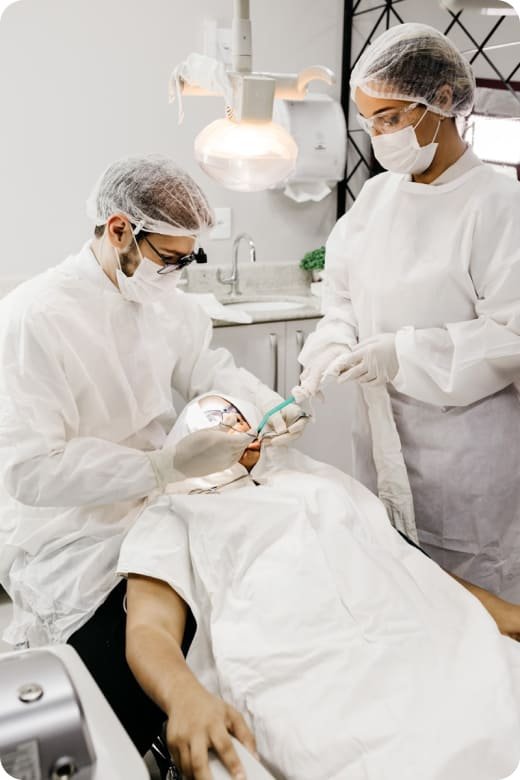
Complex Pain Requires Diagnostic Depth.
American Board Certified in Orofacial Pain
- Founder & Director, GardenCity Smiles Dental Clinic
- American Board Certified in Orofacial Pain
- Advanced Training in Implantology
- Advanced Periodontics
- Digital Dentistry & CAD/CAM Specialist Training
- Comprehensive Restorative Care
“Dr. Deepthi Kalahasti’s training in Orofacial Pain brings a broader diagnostic perspective to symptoms involving the teeth, jaw, chewing muscles, temporomandibular joints and related facial structures. This becomes particularly important when symptoms have persisted despite previous treatment, when the source of pain is unclear, or when the symptoms do not behave like a straightforward dental problem.”
Your First Appointment
What Happens During an Orofacial Pain Assessment?
A structured process to understand your pain before recommending any treatment.
01
02
03
04
Evaluate relevant teeth, muscles, jaw joints, jaw movement and craniofacial structures.
05
06
Additional Investigation
Ordered only when clinically justified — not routinely.
07
08
Treatment Plan
Choose the least invasive appropriate approach for the working diagnosis.
09
Assess response before escalating therapy. Not every patient needs every step.
Questions & Answers
Questions Patients Ask About Facial & Jaw Pain
Orofacial pain is pain experienced in the mouth, jaw, face and related structures. It may arise from teeth and gums, chewing muscles, temporomandibular joints, nerves, headache disorders or other medical conditions. Because several conditions can produce similar symptoms, identifying the source of pain is often more important than immediately treating the location where the pain is felt.
An orofacial pain specialist evaluates the pattern, possible source and contributing factors of persistent or complex pain involving the teeth, jaw, face and related structures. This involves a detailed pain history, clinical examination of teeth, muscles, jaw joints and jaw movement, review of previous treatment, and development of a management strategy based on the working diagnosis.
Related at GardenCity Smiles
TMJ & Splint Therapy
Tooth Pain
Jaw Pain (TMJ)
Root Canal Treatment
Dental Emergency
Knowledge Hub
About Dr. Deepthi
Book Appointment
Take the First Step
You've Had the Pain. Now You Need an Explanation.
The first goal is not to choose a procedure.
The first goal is to understand the pain.
Call us
Hours
Mon–Sat 9:30 AM – 7:30 PM · Sun by appointment
Diagnosis before treatment · GardenCity Smiles · Yelahanka
What Patients Say
Reviews are from verified Google patients. LIVE GOOGLE RATING TO BE INTEGRATED HERE